How to Track Calories Without Weighing Food (The Easy Way)
How to Track Calories Without Weighing Food
If you've ever tried to track your calories, you probably know the feeling. You sit down to eat, and instead of enjoying your meal, you're reaching for a kitchen scale, opening an app, searching for each ingredient, and trying to figure out if that chicken breast was 120 or 140 grams.
It's exhausting. And it's the number one reason people quit tracking their food.
But what if you could track everything you eat — accurately — without ever touching a scale?
Why Weighing Food Doesn't Work Long-Term
Let's be honest: weighing food works for a few days. Maybe a week. Then real life happens.
You eat at a restaurant. You grab a quick snack. You're at a friend's house. You don't have your scale. You estimate, you guess, and eventually you stop tracking altogether.
Research is clear on this: the more complex a tracking method is, the faster people abandon it. The key to consistency isn't precision — it's simplicity.
3 Ways to Track Calories Without a Scale
1. Voice Logging
Instead of weighing and typing, just say what you ate. "I had two scrambled eggs with toast and a coffee." That's it. An AI-powered tracker can identify the foods, estimate portions, and calculate calories and macros in seconds.
This takes about 10 seconds per meal. No scale, no app diving, no searching through databases.
2. Photo Logging
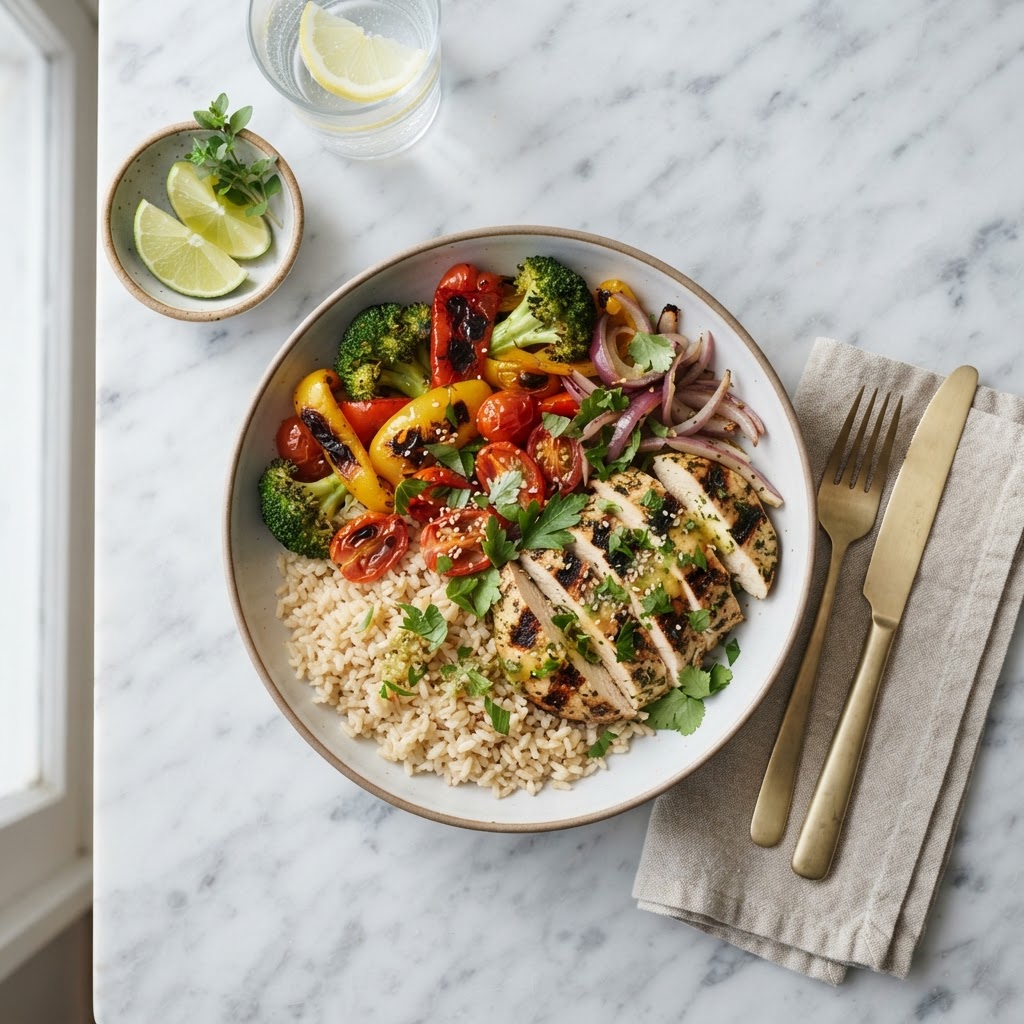
Take a photo of your plate. Modern AI vision can identify the foods, estimate portion sizes based on the visual context, and calculate calories and macros automatically.
This is perfect for meals where you didn't cook — restaurants, takeout, dinner at a friend's. Just snap and move on.
3. Text Description
Type what you ate in plain language. "A bowl of pasta with tomato sauce and parmesan." No need to specify exact grams — the AI estimates based on typical portion sizes.
This works great when you can't take a photo or speak out loud.
How Accurate Is It Really?
Here's the truth: you don't need 100% precision to see results. A 10-15% margin of error in calorie tracking is completely normal — even people who weigh their food have estimation errors.
What matters is consistency. Tracking every meal, every day, with a small margin of error is far better than tracking perfectly for three days and then quitting.
The methods above give you roughly 85-90% accuracy in about 10 seconds. That's the sweet spot for long-term success.
You Also Need to Know What to Eat
Tracking is only half the equation. You also need to know what to eat in the first place — and how much.
This is where most apps stop. They give you a tracker, but not a plan. You're left guessing what to eat to hit your calorie and macro targets.
The best approach combines both:
- A personalized meal plan that tells you exactly what to eat each day, based on your goal, body, and preferences
- Effortless tracking that lets you log meals by voice, photo, or text — no scale needed
- Automatic adjustments when you eat something outside your plan, so you always know where you stand
The Bottom Line
You don't need a kitchen scale to track your calories. You need a system that's simple enough to actually stick with.
Voice logging, photo scanning, and text descriptions give you the accuracy you need without the friction that makes you quit. Combined with a personalized meal plan tailored to your body and goal, you have everything you need — without obsessing over grams.
The best part? It doesn't have to cost anything. You can get your personalized daily meal plan for free, forever.
No credit card. No trial that expires. Just your plan, your tracking, and your results.