
Low-Cost Ways to Reduce Plastic in the Kitchen: Budget Guide
Reducing plastic in your kitchen doesn't have to mean spending a fortune on trendy bamboo gadgets or expensive glass sets. In fact, the most effective way to cut plastic is often by using what you already have or choosing simple, low-cost alternatives that last for years. If you've been feeling guilty about your plastic wrap usage or that drawer full of flimsy containers, you are in the right place. We are going to walk through your kitchen room-by-room to identify swaps that save you money in the long run.
The Philosophy of 'Good Enough' Sustainability
When you start trying to go plastic-free, it is easy to feel overwhelmed by the aesthetic, high-priced eco-products all over social media. But here is the secret: you do not need to buy new things to be more sustainable. The most eco-friendly item is the one you already own. If you have plastic food containers, keep using them until they break. When they finally do need replacing, that is when you pivot to a better material.
Why Plastic Costs You More Over Time
Think about the last time you bought a box of cling film. It costs a few dollars, works for a month, and then it is gone. If you switch to something like a basic glass bowl with a plate on top or a reusable silicone lid, you pay once and never buy it again. Cheap plastic is a recurring subscription fee for your kitchen. By switching to durable materials, you keep money in your wallet while reducing waste.
Rethinking Food Storage on a Budget
Food storage is the biggest culprit for plastic waste in most homes. Between baggies, cling film, and thin takeout tubs, it adds up fast. Instead of buying expensive sets of matching glass containers, look at what is already in your pantry.
Upcycling Glass Jars
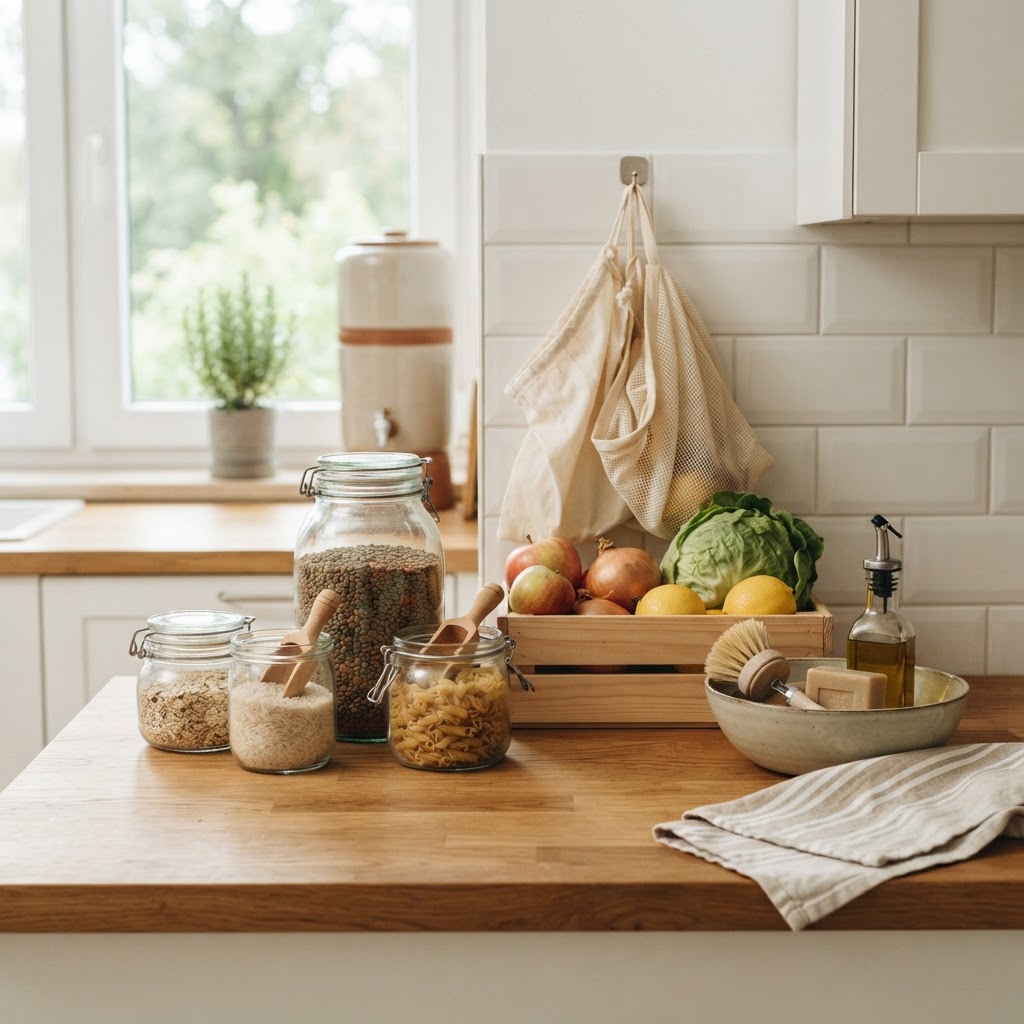
Stop throwing away your pasta sauce, jelly, and pickle jars. These are high-quality, heat-treated glass vessels that are perfect for storing leftovers, dry goods, or even freezing soup. Just soak them in hot, soapy water to remove the labels, and they are good to go.
- Use a heavy-duty scrub brush or a bit of oil to remove stubborn glue.
- Ensure you leave at least an inch of 'headspace' at the top if you are freezing liquids to prevent the glass from cracking.
- Keep the original metal lids for non-freezer storage.
"The cheapest way to live sustainably is to reuse what you already have. Your trash can is often a goldmine of storage containers waiting to be repurposed."
Scrubbing Away Plastic Sponges
Did you know most kitchen sponges are made of plastic foam and synthetic fibers that shed microplastics into your water every time you scrub? They also get gross and smelly after a week, forcing you to buy more. A natural fiber scrub brush or a cotton rag is a game changer.
- Buy a wooden dish brush with replaceable heads: These last months, not days.
- Use old cotton t-shirts cut into squares as dish rags: They are absorbent and machine washable.
- Keep a stash of these rags under the sink to replace your plastic-laden sponges.
The Shopping Swap: Buying in Bulk
When you go to the grocery store, notice how much plastic is used for items that could be bought in bulk. Buying rice, beans, or oats from the bulk bins is often cheaper because you aren't paying for the fancy, branded plastic packaging. Bring your own cloth bags or even those glass jars you saved from earlier.
Essential Habits to Replace Plastic Tools
Sometimes we buy plastic tools just out of habit. A plastic spatula, a plastic slotted spoon, a plastic measuring cup—these are all things that have perfectly good, cheaper, or longer-lasting alternatives. You do not need to replace them today, but when they melt or warp, look for wood or stainless steel instead.
Why Wood and Steel Win
Wood doesn't conduct heat, so it won't melt in your hot pan. Stainless steel can go in the dishwasher and last a lifetime. These items are often available at thrift stores for pennies. If you find a wooden spoon at a thrift store, just give it a good wash and rub it with a little mineral oil, and it will be as good as new.
Simple Habits to Build
- Say no to bags: Keep a folding reusable tote in your car or purse so you never have to ask for a plastic bag at the checkout.
- Use cloth napkins: Stop buying paper towels wrapped in plastic. Old cloth napkins or even cut-up flannel sheets work beautifully.
- Refill your soap: Buy dish soap in bulk or look for bars of dish soap that come in cardboard packaging.
Final Thoughts on Your Plastic-Free Journey
Remember, this is not about perfection. You are not going to eliminate every single piece of plastic overnight, and that is perfectly okay. Focus on the swaps that make the most sense for your life and your budget. Every time you choose to reuse a jar or skip a plastic bag, you are making a difference. Start small, save your money, and enjoy a cleaner, more organized kitchen.