
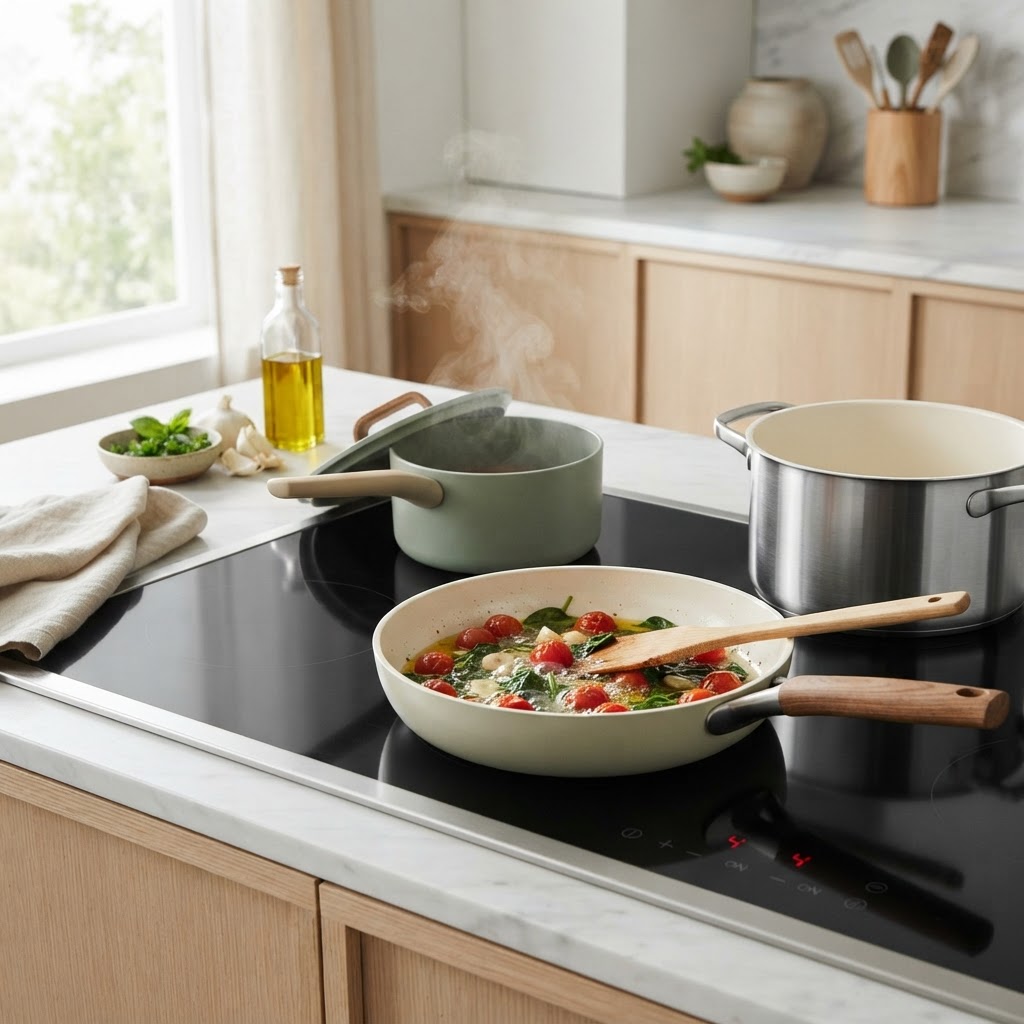
Best Non-Toxic Cookware for Induction Stoves: A Buyer’s Guide
Switching to an induction cooktop is one of the best upgrades you can make for your kitchen, but it does come with a specific challenge: you need the right pots and pans. If you are hunting for the best non-toxic cookware for induction stoves, you need pieces that are magnetic, high-performing, and free from concerning chemicals like PFOA, PTFE, and lead. When you cook on induction, heat is generated directly in the pan through electromagnetism, so your cookware must have a magnetic base—usually made of iron or magnetic stainless steel—to function properly.
Why Material Safety Matters on Induction
When you invest in a new stove, you are likely thinking about efficiency and safety. Unfortunately, not all pans are created equal. Many traditional non-stick coatings rely on chemicals that can break down at high temperatures, potentially leaching into your food. Because induction stoves can heat pans incredibly quickly, using low-quality, thin pans increases the risk of overheating. Choosing non-toxic, heavy-duty materials ensures your food stays clean and your cookware lasts for decades.
The Best Materials for Your Induction Kitchen
Not all metals are magnetic. Aluminum and copper, for example, won't work on their own. However, many brands create hybrid pans that feature a magnetic stainless steel base bonded to other materials. Here are the safest choices for your home:
- Cast Iron: Naturally non-toxic and virtually indestructible. It is the gold standard for induction.
- Stainless Steel: Look for high-grade 304 or 316 stainless steel. It is durable, non-reactive, and cleans up easily.
- Enameled Cast Iron: Gives you the benefits of cast iron with a smooth, non-reactive glass coating.
- Ceramic-Coated Pans: A popular non-stick alternative that is free from PFAS, provided you buy from reputable, transparent brands.
Understanding the Magnetic Requirement
Before you buy a new set, you can run a simple test. If a magnet sticks firmly to the bottom of your existing pan, it will work on an induction cooktop. If it doesn't stick, your stove simply won't recognize it. Keep in mind that for induction, flat bottoms are better than warped or rounded ones. Because the induction field is flat, a warped pan will create hot spots and cause your stove to hum or error out.
"The beauty of induction cooking lies in its precision. Pairing that precision with high-quality, non-toxic materials isn't just about safety—it's about elevating every meal you create."
Top Picks for Non-Toxic Performance
If you want the best of both worlds, look for brands that prioritize both health and durability. Avoid "mystery" coatings that don't disclose their chemical makeup. Instead, stick with brands that have a track record of rigorous third-party testing for heavy metals and chemical leaching.
- Le Creuset: Their enameled cast iron is the ultimate investment. It is safe, beautiful, and distributes heat perfectly.
- Made In: Their stainless steel lines are professional-grade and built to last a lifetime without hidden chemicals.
- GreenPan: If you must have a non-stick surface, their diamond-infused ceramic coating is one of the most reliable PFAS-free options.
Tips for Maintaining Your Cookware
Buying the best non-toxic cookware for induction stoves is only half the battle. To keep your pans safe and effective, you need to treat them right. Avoid using metal utensils, which can scratch even the toughest ceramic coatings. Even with durable stainless steel, it is best to avoid sudden temperature shocks—don't throw a hot pan directly into cold water.
Instead, let your pans cool naturally on the stovetop. If you use cast iron, maintain the seasoning regularly with a light coating of oil. This creates a natural, non-toxic non-stick layer that actually gets better the more you cook with it.
Common Mistakes to Avoid
It is easy to get caught up in marketing buzzwords like "eco-friendly" or "natural." Always read the product specifications to see what the core material is. Sometimes, a pan might be "ceramic" on the inside, but the base is made of aluminum without a magnetic steel plate, rendering it useless on your new stove.
Also, steer clear of pans that claim to be "non-stick" but don't list their ingredients. If a brand isn't proud enough to show their safety certifications, keep walking. Your health and your kitchen equipment are worth the extra research time.
Final Thoughts on Your Kitchen Upgrade
Transitioning to induction is a great move for both your utility bills and your cooking experience. By focusing on durable, magnetic, and chemical-free materials, you ensure that your kitchen remains a safe space for your family. Remember, the best cookware is the one you feel confident using every single day. Start with one high-quality stainless steel skillet and build your collection slowly. You will notice the difference in quality immediately, and your taste buds will thank you.